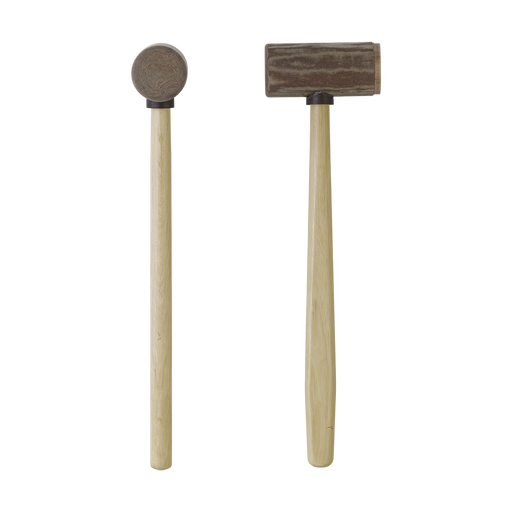
Hard‑hammer percussion is a lithic reduction technique that uses a hard stone hammerstone to detach flakes from a core. The method is foundational to the earliest known stone‑tool industries.
Definition and Significance
Hard‑hammer percussion involves striking a core with a dense, rigid percussor—typically flint, quartz, or quartzite—to produce flakes. According to Smithsonian Human Origins, Oldowan toolkits dating to ~2.6 Ma already contain hammerstones and flakes produced by this method. The technique generates a pronounced bulb of percussion and parfois an eraillure scar on the ventral surface of flakes, features highlighted by
Wikipedia.
Mechanical Characteristics
The impact creates a conchoidal fracture, yielding a distinct bulb of applied force and a clear striking platform. The blog Ember Archaeology describes the platform as the flat area where the hammer contacts the core and notes that an eraillure scar results from rebounding forces during the strike.
Materials and Hammerstones
Where flint is scarce, ancient knappers employed quartz, quartzite, and other hard stones as hammerstones (Britannica). These materials ensure sufficient kinetic energy transfer to detach sizable flakes.
Chronological Use
Oldowan (≈2.6 – 1.7 Ma)
Hard‑hammer percussion dominates Oldowan assemblages, serving as the primary method for chip removal and core preparation.
Acheulean (≈1.76 Ma – 400 ka)
Acheulean handaxes were initially shaped using hard hammers, as described in the Springer Encyclopedia, which notes deep flake scars and sinuous platforms characteristic of hard‑hammer knapping. By about 1 Ma, soft‑hammer techniques (bone, antler, wood) appear alongside hard hammers, providing finer control (
Britannica).
Late Lower Palaeolithic Evidence
The Boxgrove site in the United Kingdom (~500 ka) demonstrates a mixed toolkit: cortical flint nodules used as hard hammers and osseous percussors for later stages (Royal Society Open Science). Refitting studies reveal a systematic switch from hard to soft hammers after removing the outer rind of the core.
Comparison with Other Techniques
- –Soft‑hammer percussion – uses bone, antler, or wood, producing shallower scars and smaller flakes (
Britannica).
- –Pressure flaking – a non‑percussive method that pries off tiny flakes for final shaping, offering the highest degree of control (
UCSD).
Materials and Technological Implications
The choice of hammerstone influences flake size, bulb prominence, and overall reduction efficiency. Hard hammers generate large, robust flakes suitable for core shaping, while soft hammers allow finer retouch and edge refinement. The transition between these percussive strategies reflects evolving cognitive and motor skills in early hominins.
Internal Links
Oldowan, Acheulean, Soft-hammer percussion, Pressure flaking, Lithic reduction, Hammerstone, Conchoidal fracture
Citations
- –Smithsonian Human Origins (
https://humanorigins.si.edu/evidence/behavior/stone-tools)
- –Britannica Stone Tool Industry (
- –Britannica Hand‑Tool Techniques (
- –Royal Society Open Science (
https://royalsocietypublishing.org/rsos/article/11/1/231163/92615/Bone-tools-carnivore-chewing-and-heavy-percussion)
- –Springer Encyclopedia (
https://link.springer.com/rwe/10.1007/978-1-4419-0465-2_681)
- –Wikipedia Bulb of Applied Force (
https://en.wikipedia.org/wiki/Bulb_of_applied_force)
- –Ember Archaeology (
https://emberarchaeology.ca/features-of-a-flake/)
- –UCSD Stone Tools (