Geography
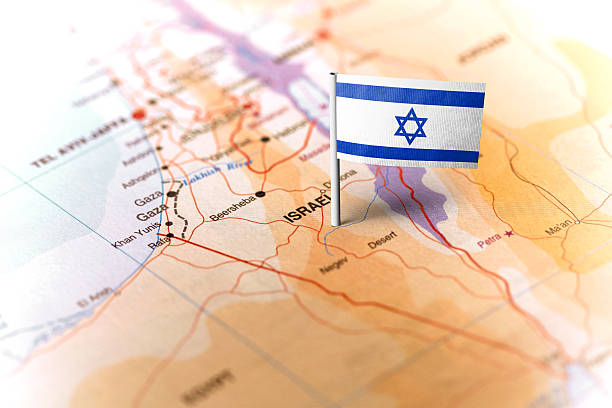
Israel is located in the Levant region of the Middle East, bordered by Lebanon to the north, Syria to the northeast, Jordan to the east, and Egypt to the southwest. It has a coastline along the Mediterranean Sea to the west. The country's topography includes the Negev Desert in the south, the fertile coastal plain along the Mediterranean, the mountainous regions of Galilee and the Golan Heights in the north, and the Jordan Rift Valley, which includes the Dead Sea—the lowest point on Earth's surface at approximately 417 meters below sea level. Source
History
Ancient Period
The region known today as Israel has a rich history dating back to ancient times. It was home to the ancient kingdoms of Israel and Judah and holds significant religious importance for Judaism, Christianity, and Islam.
Modern Era
In the late 19th and early 20th centuries, the Zionist movement emerged, advocating for the establishment of a Jewish homeland. Following the end of British mandate in Palestine, the State of Israel was declared on May 14, 1948. This led to the first Arab-Israeli war and subsequent conflicts, shaping the nation's borders and political landscape. Source
Government and Politics
Israel is a parliamentary democracy with a unicameral legislature known as the Knesset, comprising 120 members elected through proportional representation. The President serves as the head of state with largely ceremonial duties, while the Prime Minister is the head of government. The judiciary is independent, with the Supreme Court serving as the highest judicial authority. Source
Economy
Israel has a highly developed economy, characterized by a strong technology sector, advanced agricultural practices, and a robust industrial base. As of 2023, the International Monetary Fund estimated its GDP at $521.7 billion, with a GDP per capita of $53,200, ranking it 13th worldwide. The country is known for its innovation, spending a significant portion of its GDP on research and development. Source
Demographics
As of December 2023, Israel's population was approximately 9.84 million people. The population is diverse, with 73.2% identifying as Jewish, 21.1% as Arab (including Muslims, Christians, and Druze), and 5.7% classified as 'others.' The country has a high population density, particularly in urban areas. Source
Culture
Israel's culture is a blend of Jewish heritage and the diverse backgrounds of its citizens, including significant Arab influences. The country has a vibrant arts scene, with numerous theaters, museums, and music festivals. Hebrew is the official language, and the Hebrew calendar dictates national holidays and observances. Source
Science and Technology
Israel is recognized for its contributions to science and technology, ranking fifth among the most innovative countries in the Bloomberg Innovation Index. The nation has a high number of scientists and technicians per capita and is known for its advancements in fields such as cybersecurity, medical devices, and agricultural technology. Source
International Relations
Israel maintains diplomatic relations with numerous countries and is a member of various international organizations. However, its foreign relations are complex, particularly concerning neighboring countries and the ongoing Israeli-Palestinian conflict. Efforts toward peace have included treaties with Egypt and Jordan, though challenges remain. Source
Recent Developments
In recent years, Israel has faced internal political challenges, including debates over judicial reforms and societal divisions. Additionally, the country has experienced conflicts with Hamas in Gaza and tensions with neighboring countries, impacting its security and foreign relations. Source