Overview
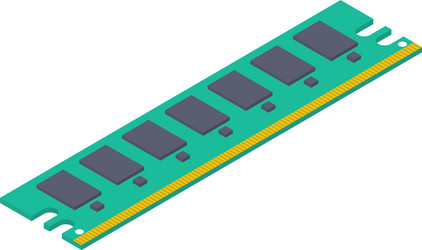
Random Access Memory (RAM) is a type of computer memory that enables data to be read and written in any order, providing rapid access to stored information. Unlike Read-Only Memory (ROM), which is non-volatile and retains data without power, RAM is volatile and loses its contents when the system is powered off. This characteristic makes RAM essential for tasks requiring quick data access and manipulation.
Types of RAM
Dynamic RAM (DRAM)
DRAM stores each bit of data in a separate capacitor within an integrated circuit. Due to capacitor leakage, the stored information must be periodically refreshed to maintain data integrity. DRAM is widely used as the main memory in computers because of its cost-effectiveness and high density. However, it consumes more power and operates at slower speeds compared to other types of RAM. TechTarget
Static RAM (SRAM)
SRAM utilizes bistable latching circuitry to store each bit of data, eliminating the need for periodic refreshing. This design results in faster access times and lower power consumption during idle states. However, SRAM is more expensive and offers lower storage density than DRAM. It is commonly employed for cache memory in processors due to its speed advantages. TechTarget
Evolution of RAM Technologies
Synchronous DRAM (SDRAM)
Introduced in the early 1990s, SDRAM synchronizes with the system's clock, allowing for more efficient data processing. This synchronization enables the memory to operate at higher speeds compared to its predecessors. Wikipedia
Double Data Rate SDRAM (DDR SDRAM)
DDR SDRAM enhances data transfer rates by transferring data on both the rising and falling edges of the clock signal. This innovation effectively doubles the data throughput without increasing the clock frequency. Subsequent generations, including DDR2, DDR3, DDR4, and DDR5, have progressively improved speed and energy efficiency. TechTarget
Graphics DDR (GDDR)
GDDR is a specialized form of DDR SDRAM optimized for graphics processing units (GPUs). It operates at higher voltages and is designed to handle the parallel processing demands of rendering graphics. GDDR has evolved through multiple generations, with GDDR7 being the latest as of 2024. TechTarget
Functionality and Importance
RAM serves as the primary workspace for a computer's operating system and applications, enabling quick access to data and instructions. When a program is executed, its data is loaded into RAM, allowing the processor to access it rapidly. The amount and speed of RAM significantly influence a system's performance, particularly in multitasking environments. Crucial
RAM vs. ROM
While both RAM and ROM are integral to a computer's operation, they serve distinct purposes. RAM is volatile and used for temporary data storage during active tasks, whereas ROM is non-volatile and stores permanent instructions essential for booting and system functions. HP Tech Takes
Historical Development
The concept of RAM dates back to the early days of computing, with technologies evolving from magnetic-core memory to semiconductor-based memory. The introduction of DRAM in the 1970s marked a significant advancement, leading to the development of modern RAM technologies that support the complex computing needs of today. Wikipedia
Future Trends
Advancements in RAM technology continue to focus on increasing speed, reducing power consumption, and enhancing data density. Emerging technologies aim to bridge the performance gap between volatile and non-volatile memory, potentially leading to new forms of memory that combine the benefits of both. Wikipedia