20th‑21st centuries; electronics; human‑computer interaction; mobile and ubiquitous computing; consumer health technology; Internet of Things.
Definition and scope
Wearable technology refers to electronic and computing devices designed to be worn on the body—such as watches, bands, glasses, clothing, or medical sensors—that collect data, support communication, or augment perception and interaction with the environment, including categories like smartwatches, fitness trackers, hearables, head‑mounted displays, smart textiles, and clinical wearables, as described by Britannica and in HMD overviews on
ScienceDirect.
Historical development
Early antecedents include wristwatches and head‑mounted display prototypes; milestones span Heilig’s stereophonic HMD (1960), Sutherland’s computer‑based HMD (1966), and continuous‑wear computing in the 1990s, as documented by the MIT Media Lab timeline MIT Media Lab Wearable Computing Timeline. Consumer smartwatches evolved from calculator and pager‑watch hybrids to connected devices, with examples cataloged by
Britannica.
Core technologies
Contemporary wearables rely on low‑power wireless connectivity, notably Bluetooth Low Energy (BLE), whose key innovation is markedly reduced power consumption relative to Classic Bluetooth, enabling multi‑day operation in small devices Performance Evaluation of Bluetooth Low Energy. Optical biosensing via photoplethysmography (PPG) underpins wrist‑worn heart‑rate measurement and related metrics such as HRV and SpO2, with methods and limitations detailed in a PPG review
A review on wearable photoplethysmography sensors. Head‑mounted displays integrate near‑eye optics, visual‑inertial tracking, and interaction modalities for VR/AR applications, summarized in the HMD topic overview
ScienceDirect. Augmented reality frameworks explain the overlay of digital content on the real world in many head‑worn wearables
Britannica – Augmented Reality.
Categories and applications
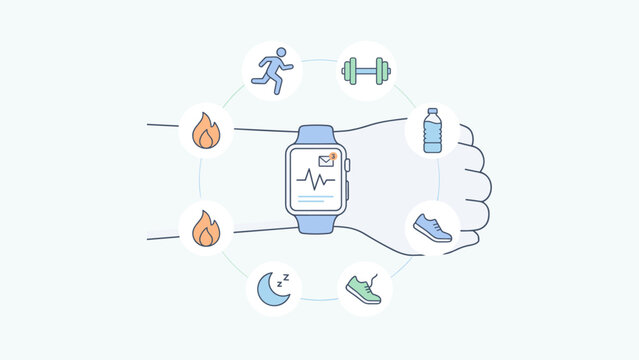
- –Smartwatches and wristbands provide notifications, activity and sleep tracking, and health measurements; historical and definitional context is provided by
Britannica.
- –Hearables and ear‑worn devices dominate unit shipments in the wearables market, while rings and smart glasses are smaller but growing categories, per IDC’s tracker forecast
IDC.
- –Head‑mounted displays support Virtual Reality and Augmented Reality use cases in gaming, training, and enterprise workflows, as outlined by
ScienceDirect and
- –Smart textiles and e‑textiles integrate sensors and conductive fibers into garments, a developing area highlighted in overviews of wearable categories by
- –Medical wearables support Remote Patient Monitoring and diagnostic functions under medical‑device regulatory frameworks, addressed by the FDA’s digital health resources and device classification pathways
FDA Guidances with Digital Health Content;
Market and industry trends
IDC forecasted worldwide wearable shipments of approximately 537.9 million units for 2024, with earwear leading and smartwatches constituting around 156.5 million units; rings and glasses show faster percentage growth from a smaller base IDC. Smartwatch shipments declined in 2024 before recovering thereafter, with notable regional shifts reported by Counterpoint Research
Counterpoint Research.
Regulation, data protection, and ethics
In the United States, when a wearable is intended for medical purposes, it may be regulated as a medical device, with Class I‑III categories and pathways such as 510(k) and PMA described by the FDA FDA Overview of Device Regulation. The FDA’s Digital Health Center of Excellence consolidates guidance on mobile medical apps, software as a medical device, and AI/ML considerations that are applicable to wearable ecosystems
FDA Guidances with Digital Health Content. In the European Union, the GDPR recognizes “data concerning health” as a special category requiring enhanced safeguards, with implications for data produced by mHealth and wearables
EDPS Health and GDPR. Independent assessments indicate variability and gaps in consumer wearable privacy practices, advocating clearer disclosures and stronger protections
Privacy in consumer wearable technologies: a living systematic review.