Ancient Peoples
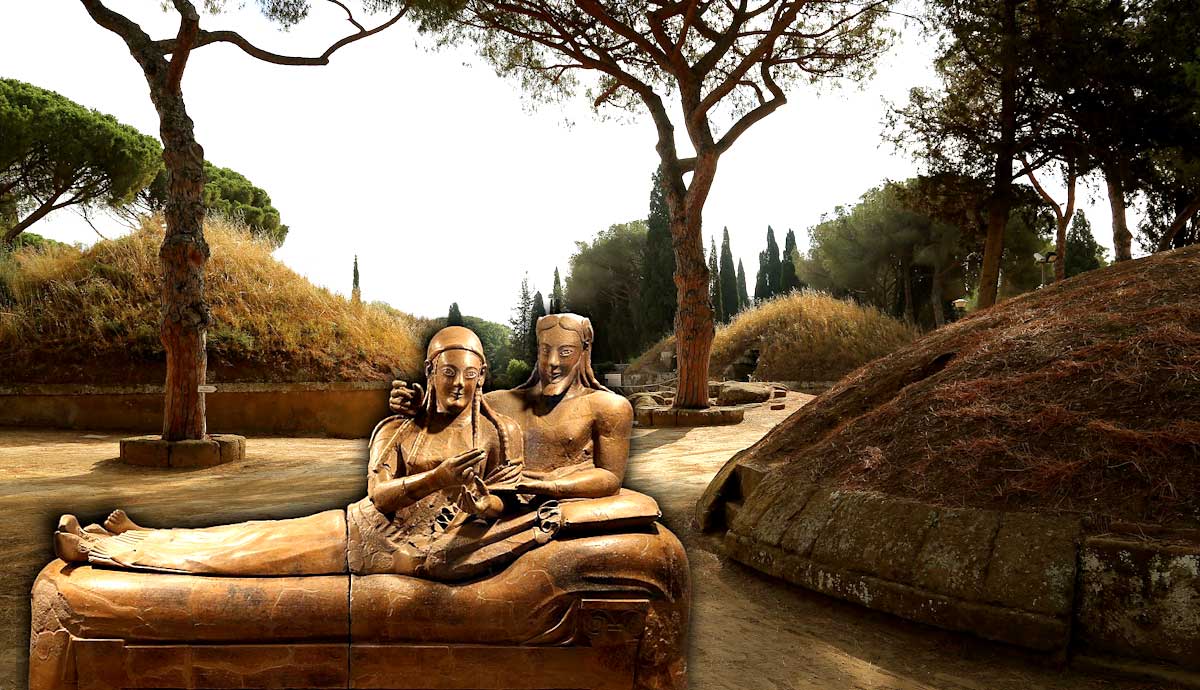
Etruscans
The Etruscans were an ancient Italic people whose urban civilization flourished in central Italy from roughly the 9th to the 1st century BCE. Speaking a non-Indo-European language and organized in autonomous city-states, they developed distinctive art, religion, and political institutions that strongly influenced neighboring Rome. Their culture was progressively absorbed into the Roman Republic by the late first millennium BCE, yet remains visible in monuments, religious practice, and symbols adopted by Romans.

Phoenicians
The Phoenicians were Semitic-speaking maritime peoples of the eastern Mediterranean, centered on the Levantine city-states of Tyre, Sidon, Byblos, and Arwad. Active especially in the 1st millennium BCE, they developed extensive trade networks, founded colonies such as Carthage, and spread a 22-letter consonantal script that influenced the Greek and later Latin alphabets. Their cities were successively incorporated into the Assyrian, Babylonian, Achaemenid, and Hellenistic empires, while their western offshoot, Punic, endured in North Africa into late antiquity.