Black Holes
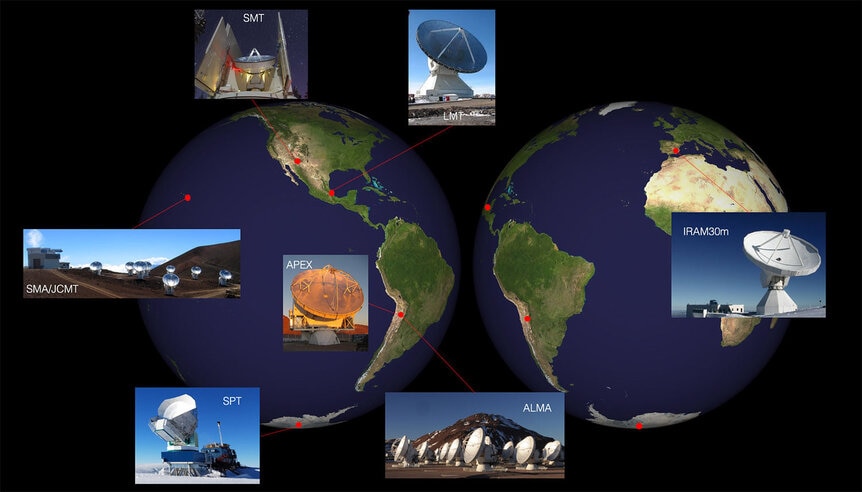
Event Horizon Telescope
The Event Horizon Telescope (EHT) is a global, Earth‑sized very long baseline interferometry array operating primarily at 230 GHz that produced the first direct images of black hole shadows. Its landmark results include images of the supermassive black holes M87* in 2019 and Sagittarius A* in 2022, followed by polarized-light maps revealing magnetic fields near the event horizon.
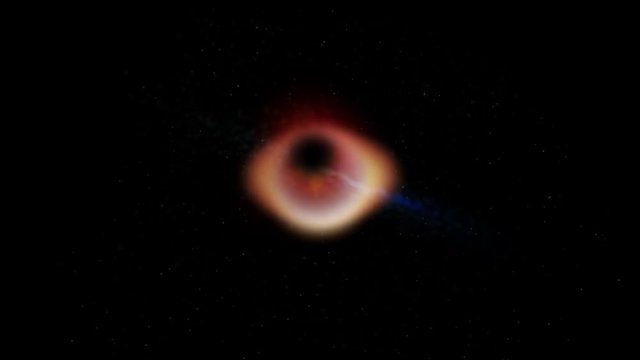
Messier 87
Messier 87 is a giant elliptical galaxy in Virgo, about 55 million light-years from Earth, and the dominant galaxy near the core of the Virgo Cluster. It hosts the supermassive black hole M87*, the first black hole ever imaged directly, and powers a prominent relativistic jet visible from radio to X-ray wavelengths.
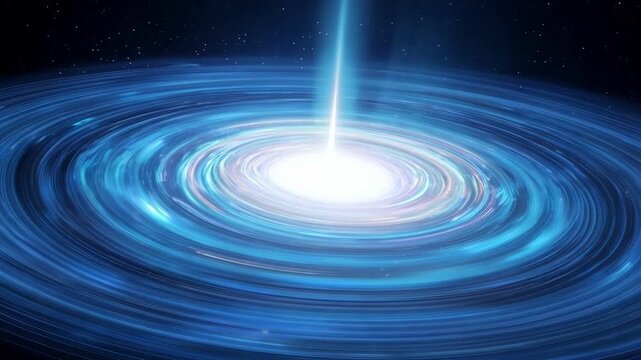
Quasar
A quasar is an extremely luminous active galactic nucleus powered by a supermassive black hole, emitting energy across the electromagnetic spectrum and often outshining its host galaxy.

Sagittarius A*
Sagittarius A* is the compact radio source identified as the Milky Way’s central supermassive black hole, located about 26,700 light-years from Earth. Its mass is roughly four million times that of the Sun, and in May 2022 it became the second black hole ever imaged directly by the Event Horizon Telescope. In 2024, horizon-scale polarimetric imaging revealed strong, organized magnetic fields near its event horizon.