Mineralogy
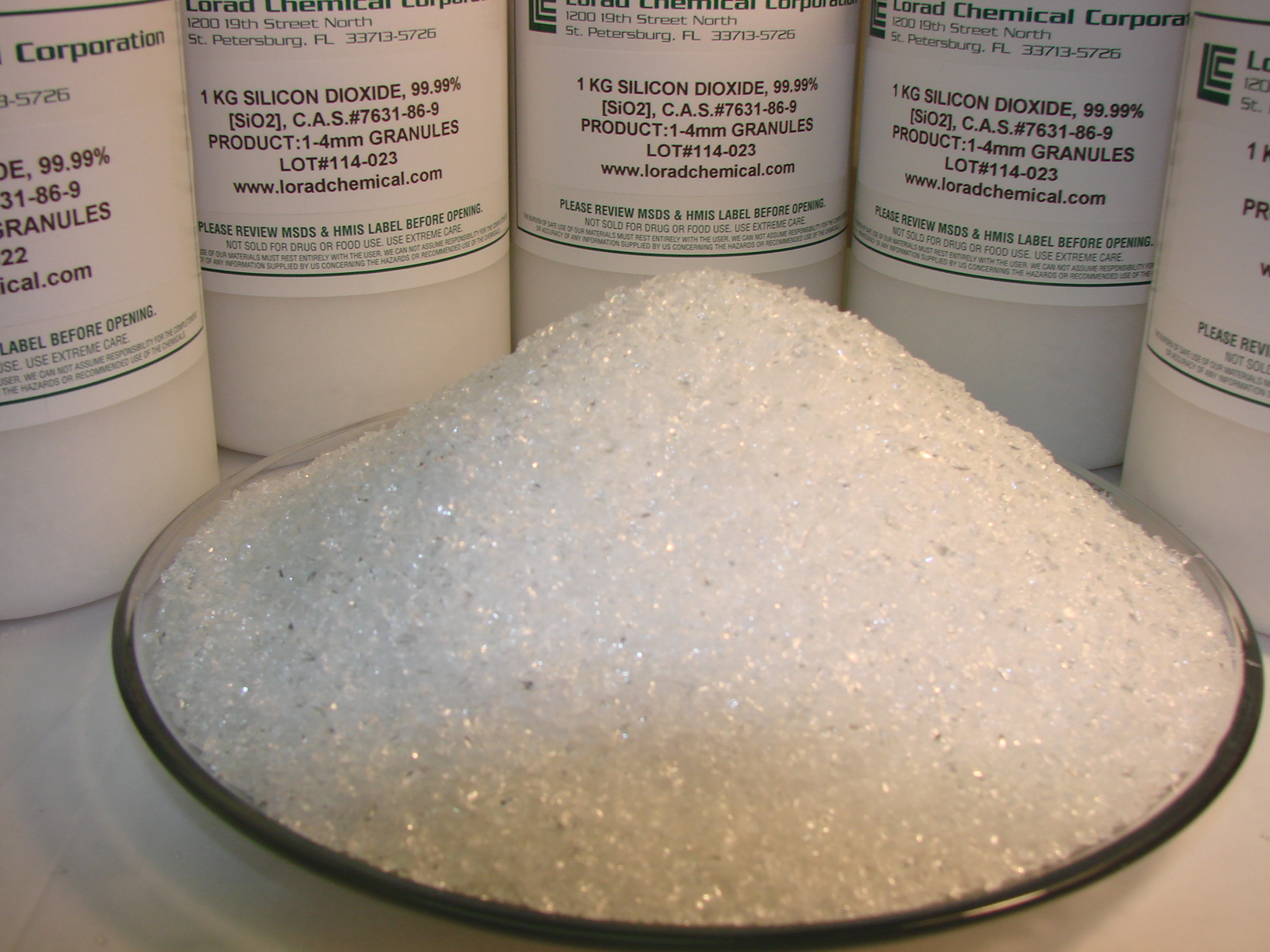
Silicon dioxide
Silicon dioxide (SiO2), also called silica, is an inorganic compound composed of silicon and oxygen that occurs widely in nature, most notably as the mineral quartz and as the principal constituent of sand. It underpins major industries including glassmaking, construction, microelectronics, and optics, and exists in both crystalline polymorphs and amorphous forms such as fused silica.
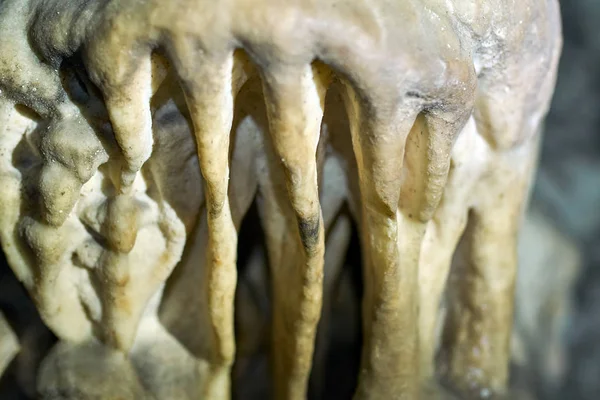
Speleothem
A speleothem is a secondary mineral deposit that forms in natural caves, most commonly composed of calcium carbonate precipitated from dripping, seeping, or pooling water. Varied forms include stalactites, stalagmites, flowstone, helictites, and cave pearls, which record environmental conditions and often serve as precisely datable archives of past climate.

Stalactites
Stalactites are mineral formations that hang from the ceilings of caves, formed through the deposition of minerals from dripping water. They are primarily composed of calcium carbonate and develop over thousands of years.
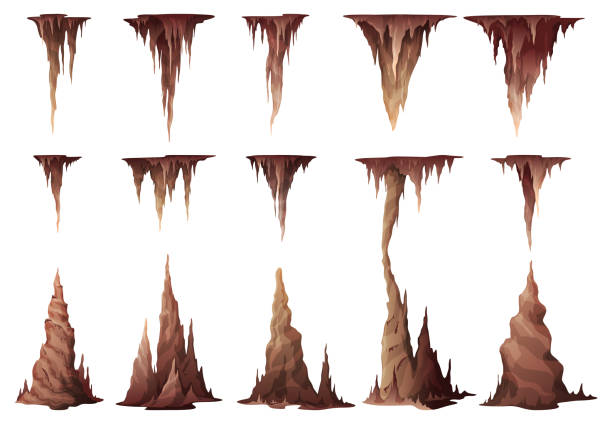
Stalagmite
A stalagmite is a cave-floor mineral deposit that builds upward from dripping water, most commonly composed of calcium carbonate. Stalagmites form where mineral-laden water droplets lose carbon dioxide or evaporate, precipitating calcite or other minerals into mounded, often rounded structures.