Natural Hazards
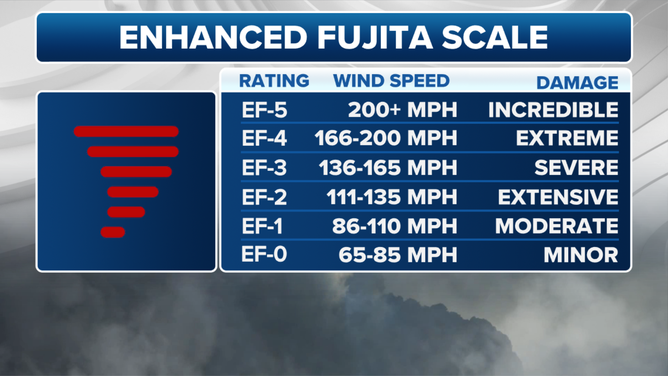
Enhanced Fujita Scale
The Enhanced Fujita Scale is a tornado damage‑based intensity scale adopted in the United States in 2007, employing 28 damage indicators and eight degrees of damage to rate tornadoes from EF0 to EF5; Canada adopted a version in 2013.

Tsunami
A tsunami is a series of long-wavelength ocean waves caused by large, abrupt displacement of water, most often from undersea earthquakes at subduction zones. Traveling across entire ocean basins at jet-plane speeds in deep water, tsunamis grow dramatically in height near coasts, producing destructive inundation and currents. Modern detection and warning systems combine seismic networks, deep-ocean pressure buoys, coastal tide gauges, and international coordination to reduce loss of life. The deadliest recorded tsunami followed the 2004 Indian Ocean earthquake, with roughly 228,000 fatalities across multiple countries.

Volcanic eruption
A volcanic eruption is the release of molten rock, gases, and fragmented material from a volcano onto Earth’s surface, driven by buoyant magma and the expansion of dissolved gases. Eruptions range from gentle effusions of lava to highly explosive events that inject ash and aerosols into the atmosphere, with impacts that can extend from local communities to global climate. The style and magnitude of eruptions depend chiefly on magma composition, viscosity, and gas content, as well as interaction with external water.

Volcanology
Volcanology is the scientific study of volcanoes, lava, magma, and related geological phenomena, encompassing their formation, eruption mechanisms, and impacts on the environment and human societies.