Paleoclimatology

Glacial period
A glacial period is a prolonged interval within an ice age when global temperatures cool and continental ice sheets and mountain glaciers advance. The most recent glacial period spanned roughly 115,000 to 11,700 years ago and culminated in the Last Glacial Maximum, when ice sheets covered large parts of North America and Eurasia and global sea level was about 120–125 meters lower than today.
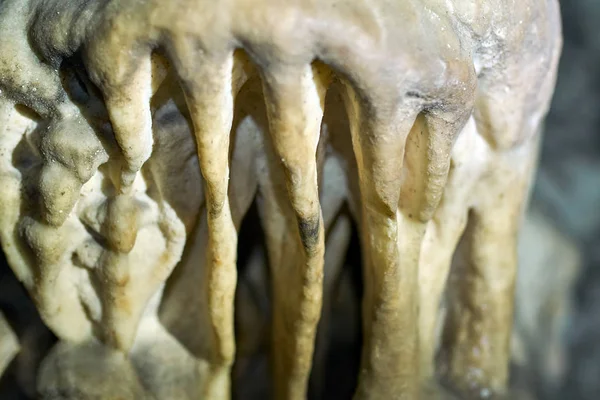
Speleothem
A speleothem is a secondary mineral deposit that forms in natural caves, most commonly composed of calcium carbonate precipitated from dripping, seeping, or pooling water. Varied forms include stalactites, stalagmites, flowstone, helictites, and cave pearls, which record environmental conditions and often serve as precisely datable archives of past climate.
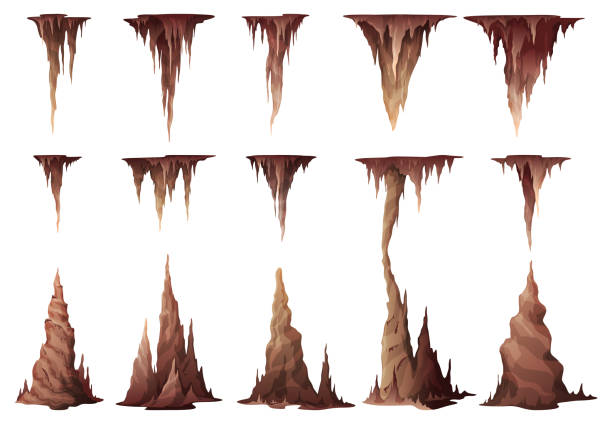
Stalagmite
A stalagmite is a cave-floor mineral deposit that builds upward from dripping water, most commonly composed of calcium carbonate. Stalagmites form where mineral-laden water droplets lose carbon dioxide or evaporate, precipitating calcite or other minerals into mounded, often rounded structures.