Space Physics
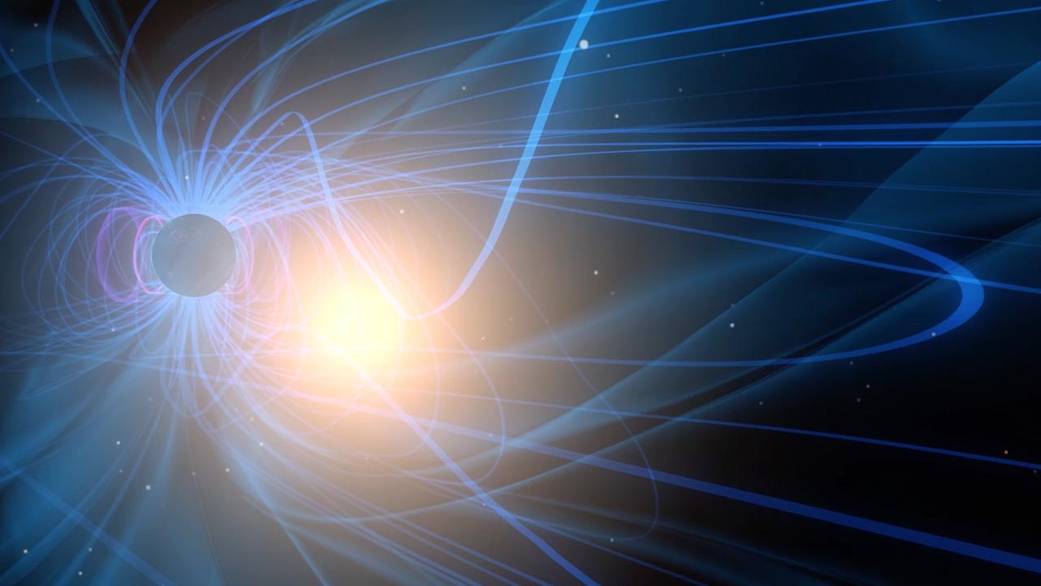
Magnetic reconnection
Magnetic reconnection is a fundamental process in plasma physics in which magnetic field lines change connectivity, rapidly converting stored magnetic energy into plasma kinetic energy, heating, and particle acceleration. It operates in the Sun’s corona, Earth’s magnetosphere, the solar wind, astrophysical systems, and laboratory devices, and is central to phenomena such as solar flares, geomagnetic substorms, and disruptions in fusion experiments.
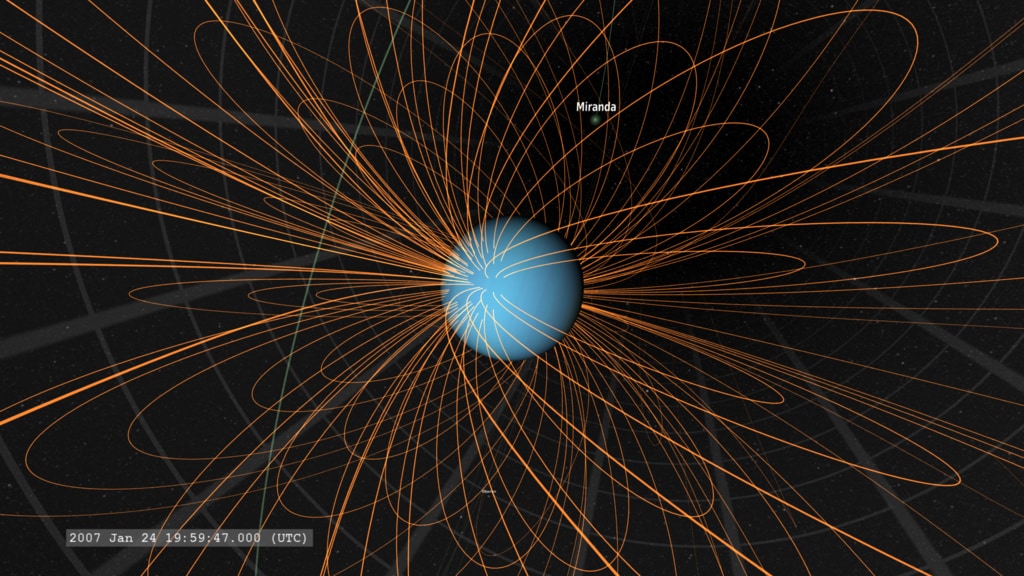
Magnetosphere
A magnetosphere is the region of space around an astronomical body where its magnetic field dominates the motion of charged particles. Shaped by interaction with ambient plasma such as the solar wind, magnetospheres include distinct boundaries and current systems, regulate the entry of energy and particles, and play a central role in space weather and atmospheric evolution.
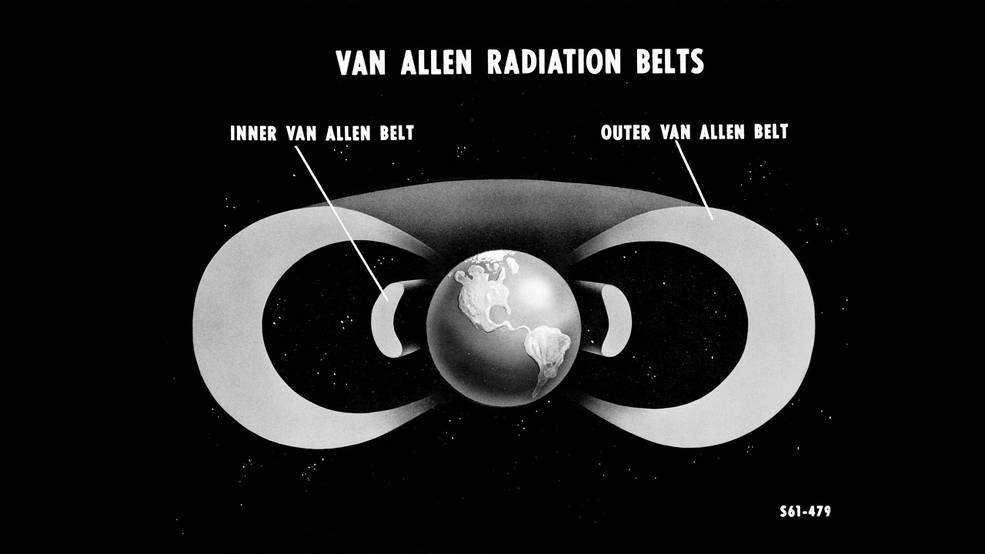
Van Allen radiation belts
The Van Allen radiation belts are toroidal zones of energetic charged particles trapped by Earth’s magnetic field. Discovered in 1958 using data from the U.S. satellite Explorer 1, they comprise a relatively stable inner belt dominated by protons and a highly variable outer belt dominated by electrons, with occasional transient additional belts during strong space‑weather events. These belts affect spacecraft design and operations and remain a central subject in space physics and space weather research.