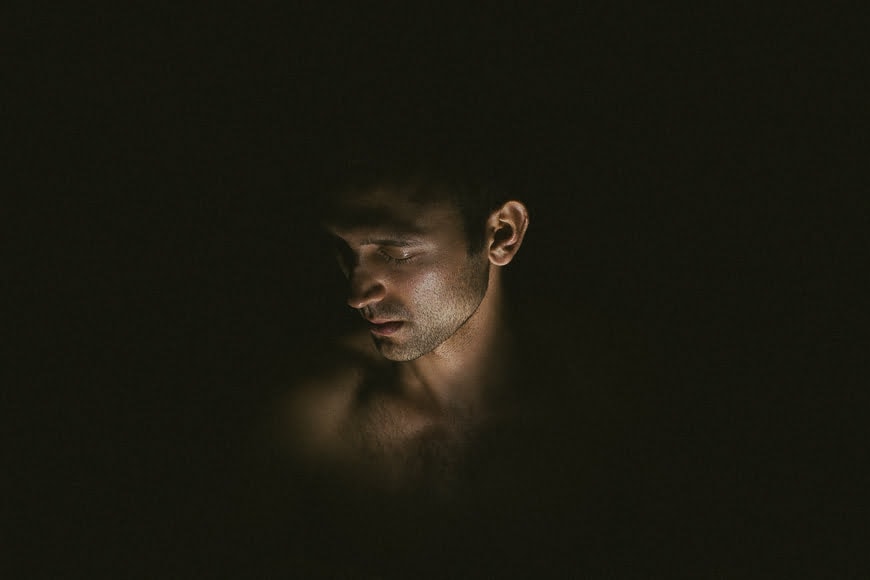
Chiaroscuro is a technique in the visual arts that organizes light and shadow to define three-dimensional form and to shape pictorial drama. The term derives from Italian, combining chiaro (“light” or “clear”) and scuro (“dark”), and in art history it denotes both a general approach to modeling and several specific media practices. According to Encyclopaedia Britannica, artists in antiquity experimented with light–dark effects, but the technique reached a sustained, systematic form in late 15th‑century European painting.
Definition and scope
In painting and drawing, chiaroscuro describes the calibrated gradation of values that creates a sense of volume, often guiding attention through contrasts between illuminated and shaded areas. It functions at the level of individual forms and, in many works, at the level of overall composition. A standard account defines chiaroscuro as “the representation of light and shadow as they define three‑dimensional objects,” with notable applications by Leonardo da Vinci and later Baroque painters. Encyclopaedia Britannica. In museum pedagogy and survey texts, the term is further extended to describe related practices in drawing on toned paper (dark medium plus white heightening) and to a distinct printmaking method, the chiaroscuro woodcut.
Smarthistory;
The Metropolitan Museum of Art – Heilbrunn Timeline.
Historical development
Evidence for light–dark modeling appears in Greco‑Roman art, but Renaissance artists created a systematic vocabulary for value gradation. In the 1480s–1500s, Leonardo da Vinci used chiaroscuro to articulate figures emerging from shadowed spaces, notably in “The Virgin of the Rocks,” where contrasts of light and dark define volumes and focus the devotional ensemble. Encyclopaedia Britannica;
National Gallery, London. Renaissance workshop practice also developed “chiaroscuro drawings,” typically on colored or prepared paper using a dark medium (ink, chalk) plus white heightening to render lights, a method closely related to painterly modeling.
Smarthistory.
Seventeenth‑century artists amplified chiaroscuro’s expressive potential. Caravaggio used stark illumination against deep shadow to stage figures with heightened immediacy; art historians designate such extreme light–dark orchestration as tenebrism (tenebrismo), an approach that intensifies dramatic contrast beyond ordinary modeling. Encyclopaedia Britannica – Tenebrism;
National Gallery, London. Northern and Dutch masters, including Rembrandt, used chiaroscuro not only for spectacle but also for psychological effect in painting and print, integrating nuanced value structure with narrative emphasis.
Encyclopaedia Britannica.
Eighteenth‑century Rococo aesthetics often tempered stark light–dark contrasts, but Romantic painters revived pronounced chiaroscuro to produce emotive atmospheres in the early 19th century. Encyclopaedia Britannica.
Chiaroscuro woodcut
In the graphic arts, “chiaroscuro” names a multi‑block woodcut technique in which separate blocks, inked in different tones, are printed in register to simulate wash drawings or to produce color values that model light and shade. A common arrangement uses a darker “key” block for line with one or more tone blocks to supply mid‑tones and shadows. Encyclopaedia Britannica. The method emerged in the early 16th century. In Italy, Ugo da Carpi was the first major practitioner; he petitioned the Venetian Senate in 1516 for protection of his “new manner of printing light and dark,” and later received a papal privilege. At the same time, scholars note earlier German experiments by Hans Burgkmair and Lucas Cranach before 1510, showing that priority was contested.
The Metropolitan Museum of Art;
Encyclopaedia Britannica – Ugo da Carpi.
The technique flourished in Italy across the 1500s, interpreting designs by masters such as Raphael and Parmigianino; a canonical example is Ugo da Carpi’s Diogenes, printed from four blocks in green tones. Cleveland Museum of Art. Modern scholarship and exhibitions have examined the process and its aesthetics, emphasizing block design, inking sequences, and the simulation of tonal drawing.
National Gallery of Art, Washington;
The Metropolitan Museum of Art – Heilbrunn Timeline. Museum interpretations further note that unprinted paper often serves as the highlight, with mid‑tones and shadows supplied by successive tone blocks.
Cooper Hewitt, Smithsonian Design Museum;
The Metropolitan Museum of Art.
Techniques and materials
- –Painting: Value gradation is achieved through controlled layering, glazing, and modulation of local color to model form. Renaissance sources identify chiaroscuro alongside related modes such as sfumato and, later, the highly contrasted tenebrism.
Encyclopaedia Britannica;
- –Drawing: On toned or prepared papers, artists combine a dark medium with white bodycolor to articulate lights, exploiting the paper’s middle tone as a base.
Smarthistory.
- –Printmaking: Multi‑block registration enables a hierarchy of values; a key block may define line, while tone blocks add massed shadows or atmospheric depth. Historical practice varied by workshop and region.
The Metropolitan Museum of Art – Heilbrunn Timeline.
Distinctions and related terms
Tenebrism designates an aesthetic of extreme light–dark contrast, often with a single directional light source against enveloping shadow, associated closely with Caravaggio and his followers. Chiaroscuro, by contrast, names the broader practice of modeling by value gradation in any medium. Encyclopaedia Britannica – Tenebrism;
National Gallery, London.
Applications beyond painting
The vocabulary of chiaroscuro migrated into photography and cinematography, where low‑key, high‑contrast lighting patterns shape mood and direct attention. Discussions of classic and proto–Film noir frequently identify “chiaroscuro lighting” as a hallmark of visual style, citing shadow‑saturated sets, directional pools of light, and expressive silhouettes. BFI – Sight and Sound;
BFI. Museums and galleries also apply the term pedagogically to explain how viewers read volume from light and shade in drawings and prints.
National Gallery, London;
The Metropolitan Museum of Art – Heilbrunn Timeline.
Notable artists and periods
- –Renaissance: Leonardo da Vinci refined value modeling and atmospheric transitions; followers across Lombardy and beyond adapted these effects.
National Gallery, London;
- –Baroque: Caravaggio’s dramatic illumination influenced international “Caravaggisti,” while Rembrandt integrated chiaroscuro for narrative tension and introspection in painting, drawing, and etching.
Media and institutions
Collections and exhibitions in major museums have framed chiaroscuro as a core concept for understanding Western art technique. Surveys of woodcut printing and dedicated shows—such as “The Chiaroscuro Woodcut in Renaissance Italy” (Los Angeles County Museum of Art; National Gallery of Art, Washington, 2018)—have documented early color printing processes, artists, and workshop practices. National Gallery of Art, Washington;
The Metropolitan Museum of Art – Heilbrunn Timeline.