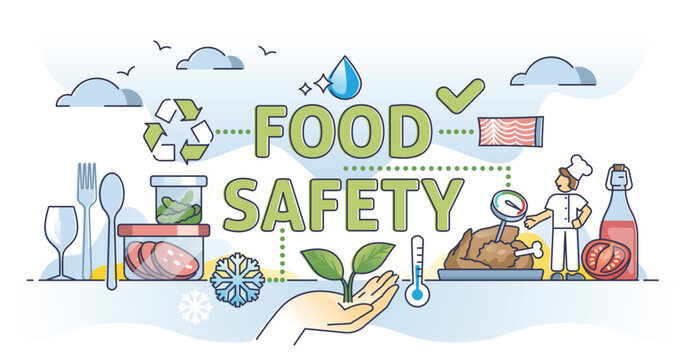
Definition and scope
Food safety is the set of risk-based measures that protect consumers from biological, chemical, and physical hazards in food along the supply chain from primary production to consumption, aiming to keep food safe and suitable for its intended use, as reflected in Codex general texts and WHO guidance (Codex Alimentarius,
World Health Organization). (
fao.org)
Global burden and public health context
WHO estimates that each year unsafe food causes 600 million illnesses and 420,000 deaths globally, with 33 million healthy life years lost; children under five bear a disproportionate burden (World Health Organization;
WHO news release, 2015). (
who.int)
In the United States, the Centers for Disease Control and Prevention estimates about 48 million illnesses, 128,000 hospitalizations, and 3,000 deaths annually from foodborne diseases (
CDC). (
archive.cdc.gov)
WHO’s Global Strategy for Food Safety 2022–2030, adopted by the World Health Assembly, sets targets to strengthen national systems and reduce foodborne disease burden (
WHO Global Strategy 2022–2030). (
who.int)
Hazard categories
Food safety hazards are commonly grouped as:
- –Biological: bacteria (e.g., Salmonella, Listeria, Campylobacter), viruses (e.g., norovirus), and parasites; WHO and CDC identify these as leading causes of foodborne illness (
WHO;
CDC FoodNet). (
- –Chemical: natural toxins (e.g., mycotoxins), residues and contaminants (e.g., pesticides, heavy metals), and food-contact substances; EFSA’s monitoring illustrates pesticide-residue assessment within the EU (
EFSA). (
- –Physical: foreign objects such as glass or metal fragments, addressed within Codex hygiene principles and industry GMP/GHP (
Codex). (
- –Allergens: in the U.S., nine major allergens (milk, egg, fish, crustacean shellfish, tree nuts, peanuts, wheat, soybeans, and sesame) require labeling under FALCPA and the 2021 FASTER Act (
FDA;
Core prevention principles and household controls
WHO’s “Five Keys to Safer Food” summarize universally applicable behaviors: keep clean; separate raw and cooked; cook thoroughly; keep food at safe temperatures; use safe water and raw materials (WHO manual). (
who.int)
USDA FSIS advises avoiding the “danger zone” between 40°F and 140°F, limiting room‑temperature exposure to two hours (one hour if above 90°F), and holding hot foods ≥140°F and cold foods ≤40°F (
FSIS;
FSIS basics). (
fsis.usda.gov)
Safe minimum internal temperatures include 165°F for poultry, 160°F for ground meats, and 145°F (with ≥3‑minute rest) for whole cuts and 145°F for fish (
FSIS temperature chart). (
fsis.usda.gov)
Process controls and technologies
Heat treatments such as pasteurization are validated process controls that inactivate pathogens; standard HTST pasteurization heats milk to about 72°C for 15 seconds (Encyclopaedia Britannica). (
britannica.com)
Much of modern preventive control builds on the Hazard Analysis and Critical Control Points (HACCP) approach, first systematized for space‑mission foods and later generalized by industry and regulators (
NASA). (
nasa.gov)
Standards and management systems
The Codex General Principles of Food Hygiene (CXC 1‑1969) provide globally recognized good hygiene practices and HACCP guidelines; recent revisions emphasize management commitment and food safety culture (Codex texts overview;
Food Safety Magazine summary). (
fao.org)
ISO 22000:2018 specifies requirements for a food safety management system for any organization in the food chain; the 2018 edition (confirmed 2023) integrates Codex HACCP principles, and a new edition is under development (
ISO 22000:2018;
ISO/CD 22000). (
iso.org)
Laws, regulation, and oversight
In the United States, the Food and Drug Administration (FDA) regulates most foods, and the Food Safety Modernization Act (FSMA, Jan. 4, 2011) refocused the system on prevention, including mandatory preventive controls, risk‑based inspections, and recall authority (FDA FSMA background). (
fda.gov)
Key FSMA rules include the Preventive Controls for Human Food rule (hazard analysis and risk‑based preventive controls), the Produce Safety Rule (standards for produce growing and harvesting), and the Food Traceability Final Rule implementing FSMA §204, with a compliance date of January 20, 2026 (
FDA PCHFR;
FDA Produce Safety;
FDA Traceability Rule). (
fda.gov)
USDA’s Food Safety and Inspection Service (FSIS) oversees meat, poultry, and processed egg products, enforcing statutes such as the Federal Meat Inspection Act and the Poultry Products Inspection Act (
USDA/FSIS About). (
fsis.usda.gov)
In 2024–2025, FDA consolidated food activities in a unified Human Foods Program to streamline oversight of microbiological safety, chemical safety, and nutrition (
FDA HFP press announcement;
FDA HFP page). (
fda.gov)
Surveillance, early warning, and incident response
CDC’s Foodborne Diseases Active Surveillance Network (FoodNet) conducts active surveillance for key enteric pathogens and tracks trends across a catchment covering about 16% of the U.S. population (CDC FoodNet). (
cdc.gov)
The FAO/WHO International Food Safety Authorities Network (INFOSAN) facilitates rapid cross‑border information exchange during food safety events, supporting coordinated risk management globally (
INFOSAN, WHO;
INFOSAN, FAO). (
who.int)
In the European Union, the European Food Safety Authority conducts risk assessment and the Rapid Alert System for Food and Feed (RASFF) enables authorities to share urgent notifications that can trigger recalls (
EFSA;
European Commission—RASFF). (
efsa.europa.eu)
Pathogens of concern and high‑risk foods
Listeria monocytogenes poses severe risks to pregnant people, older adults, and immunocompromised individuals; CDC advises those at higher risk to avoid unheated deli meats and certain soft cheeses unless reheated to 165°F (74°C) or until steaming hot (CDC prevention;
CDC outbreak guidance). (
cdc.gov)
Produce safety is a priority because raw fruits and vegetables can transmit pathogens; FSMA’s Produce Safety Rule establishes standards for agricultural water, soil amendments, personnel hygiene, and equipment sanitation to reduce contamination (
FDA Produce Safety). (
fda.gov)
Consumer information and allergen labeling
Allergen labeling is a critical risk management measure; the FASTER Act designates sesame as the ninth major U.S. allergen effective January 1, 2023, supplementing FALCPA requirements (FDA FASTER Act;
FDA Food Allergies). (
fda.gov)
Emerging challenges
Globalization, climate change, and antimicrobial resistance (AMR) affect hazard profiles and surveillance needs; EFSA’s CLEFSA project and WHO materials describe climate‑driven shifts in risks, including algal toxins and pathogen ecology changes (EFSA—Climate change and food safety;
CLEFSA report;
WHO—Food safety, climate change and the role of WHO). (
efsa.europa.eu)
WHO’s 2022–2030 strategy and the FAO/WHO coordination framework with FAO’s Strategic Priorities (2022–2031) emphasize stronger national control systems, risk communication, laboratory capacity, and international cooperation (
WHO Global Strategy;
WHO–FAO coordination framework, 2024). (
who.int)