Jews are an ethnoreligious people whose identity descends from the ancient Israelites and Hebrews of the Near East, combining elements of shared ancestry, religion, language, and culture. In rabbinic law and modern usage, Jewish belonging may derive from maternal descent or from conversion, while the modern State of Israel’s Law of Return (1950, amended 1970) grants immigration and citizenship to Jews and recognized converts, reflecting peoplehood alongside religion, according to Encyclopaedia Britannica. The term “Jew” (Hebrew: Yehudi) traces to Judah, one of the Israelite tribes and later the southern kingdom, while the designations “Hebrews” and “Israelites” mark earlier periods and contexts, as summarized by
Encyclopaedia Britannica.
Judaism is the monotheistic religious tradition of the Jewish people, centered on covenantal beliefs and practice and grounded in the Hebrew Bible and the Oral Torah, with worship historically focused in Jerusalem during the First and Second Temple periods and later in synagogues and study houses across the Diaspora, per Encyclopaedia Britannica.
Ancient origins and the Diaspora
Ancient Israelite society coalesced in the Levant, with the First Temple in Jerusalem destroyed by Babylonia in 586 BCE and many Judeans exiled to Babylon; the return under Persian rule led to the rebuilding of the Temple in the late 6th–5th centuries BCE, inaugurating the Second Temple era, as synthesized by Encyclopaedia Britannica. After Rome’s destruction of the Second Temple in 70 CE and suppression of subsequent revolts, Jewish life reorganized around Torah study, prayer, and communal institutions, forming the basis of rabbinic Judaism and the long-term Diaspora across the Mediterranean and beyond, according to
Encyclopaedia Britannica. This dispersion produced enduring centers of Jewish life in Babylonia and later in Iberia, Central and Eastern Europe, North Africa, and the Middle East, with religious leadership and scholarship circulating among these regions, per
Encyclopaedia Britannica.
Belief, law, and texts
Jewish religious life is anchored in the Torah (Pentateuch), revered both as a written canon and—together with its transmitted interpretations—as a broader body of divine instruction and law, as explained by Encyclopaedia Britannica. The rabbinic corpus known as the Talmud comprises the Mishnah and Gemara with associated midrashic literature and frames halakhic (legal) discourse that guides ritual, ethical, and communal practice, per
Encyclopaedia Britannica. While observance varies, Shabbat (the weekly Sabbath) and annual festivals such as Passover (commemorating the Exodus), Rosh Hashanah (New Year), Yom Kippur (Day of Atonement), and Hanukkah (Temple rededication) structure the Jewish calendar, as outlined by
Encyclopaedia Britannica,
Encyclopaedia Britannica, and
Encyclopaedia Britannica.
Languages
Hebrew, once primarily liturgical after antiquity, was revived as a modern vernacular in the late 19th and 20th centuries and today serves as a principal language of Jewish life and the official language of Israel, according to Encyclopaedia Britannica. Diaspora communities developed Jewish ethnolects, notably Yiddish (a High German–derived language with Hebrew/Aramaic and later Slavic components) widespread among Ashkenazim, and Ladino (Judeo‑Spanish) among Sephardim; both have rich literary traditions and continue in use in specific communities and educational settings, per
Encyclopaedia Britannica and
Encyclopaedia Britannica.
Cultural groupings
Jewish cultural diversity reflects historical geographies. Ashkenazi Jews trace communal development to the Rhineland and later Central and Eastern Europe, with distinct liturgies, Yiddish language, and customs, summarized by Encyclopaedia Britannica. Sephardi Jews descend from medieval Iberian Jewry and subsequent communities around the Mediterranean and Western Europe, often preserving Ladino and particular rites, per
Encyclopaedia Britannica. Mizrahi (Eastern) Jews developed across North Africa, the Levant, and West Asia, many migrating to Israel after 1948 while maintaining varied Judeo‑Arabic, Judeo‑Persian, and other traditions, as outlined by
Encyclopaedia Britannica.
Denominations and religious life today
Contemporary Jewish religious streams differ in their approach to halakha (Jewish law) and modernity. Orthodox Judaism maintains the binding authority of Torah and halakha as immutable; Haredi (ultra‑Orthodox) subgroups emphasize strict observance and social separation, per Encyclopaedia Britannica. Conservative (Masorti) Judaism regards halakha as binding yet historically developing, balancing continuity and change, as described by
Encyclopaedia Britannica. Reform Judaism adapts ritual and law to modern conditions and ethical priorities while retaining core theological commitments, per
Encyclopaedia Britannica. Institutional configurations vary by country; for example, in 2025 the UK’s Reform and Liberal movements formally merged as “Progressive Judaism,” reflecting consolidation within non‑Orthodox currents, reported by
the Guardian.
Modern history, antisemitism, and the Holocaust
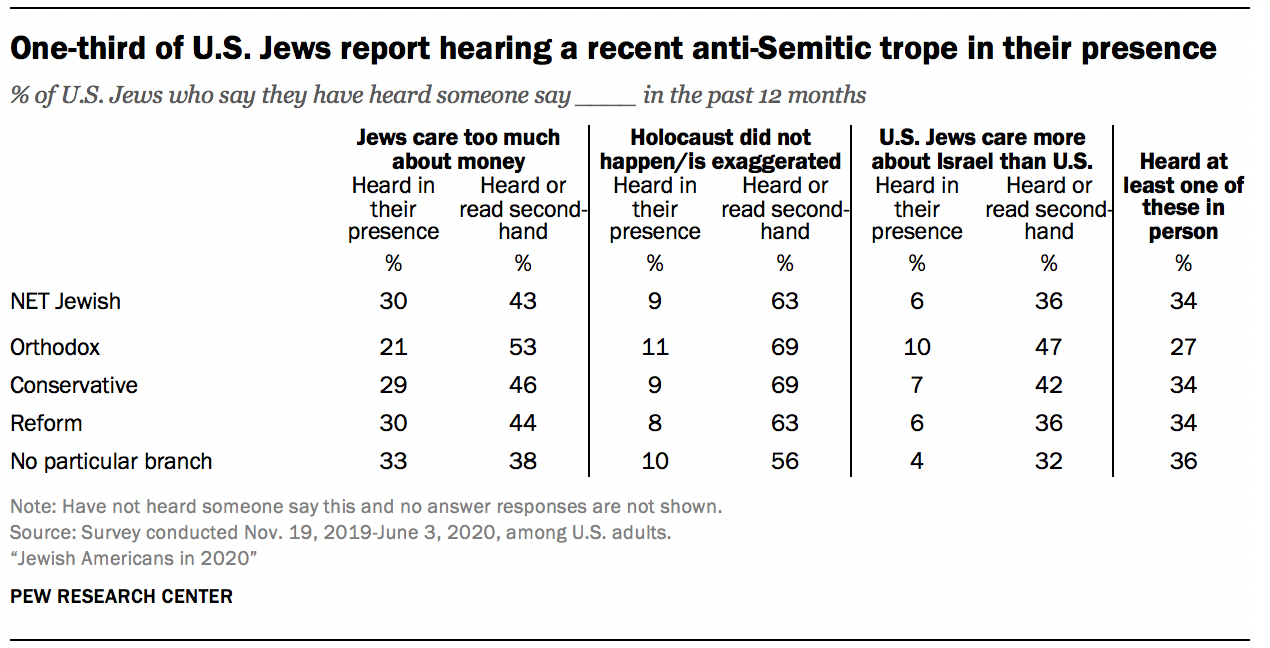
In the modern era, emancipation and new civic frameworks reshaped Jewish life across Europe and the Americas, while antisemitism—religious, racial, and political—recurred in diverse forms, defined by Encyclopaedia Britannica. Under Nazi rule, state‑sponsored persecution and genocide resulted in the murder of approximately six million Jews during the Holocaust (Shoah), as documented by the
United States Holocaust Memorial Museum. Ongoing historical recovery continues; in 2025 Yad Vashem reported that the names of five million of the six million Jewish victims had been identified, a milestone noted by
Reuters. Holocaust remembrance and scholarship remain central across Jewish communities and public institutions, supported by extensive archival resources and registries, per the
USHMM.
Zionism, statehood, and Israel
Zionism emerged in the 19th century as a movement for Jewish national revival and return, culminating in the establishment of the State of Israel in 1948 following the UN partition proposal and the end of the British Mandate. Israel’s early survival amid regional war and its subsequent consolidation made it a primary center of Jewish life and immigration (aliyah), according to Encyclopaedia Britannica and
Encyclopaedia Britannica. The Jewish Agency has played major roles in immigration and diaspora relations since before statehood and thereafter, per
Encyclopaedia Britannica.
Demography
Global Jewish population estimates vary with definitions. Using “core” definitions (self‑identifying Jews who do not profess another religion), the worldwide Jewish population stood about 15.7–15.8 million in 2023–2024, with roughly 7.2–7.3 million in Israel and about 8.5 million outside Israel, including approximately 6.3 million in the United States, according to summary data published by the Jewish Agency and reported contemporaneously in 2024 by
The Times of Israel. In the United States specifically, Jews constituted about 2.4% of adults in 2020, with an estimated 7.5 million Jews of all ages, per the
Pew Research Center and its summary of key findings (
Pew Research Center). The largest communities outside Israel and the U.S. are found in France and Canada, along with significant populations across Latin America, Western Europe, and Oceania, as reflected in Jewish Agency and yearbook analyses summarized by the sources above.
Culture and practice
Jewish ritual and cultural life integrate home and synagogue, text and practice. Shabbat sanctifies weekly time through rest from labor, prayer, and festive meals; its prohibitions and liturgy, including Havdalah at close, are foundational markers of Jewish time, as outlined by Encyclopaedia Britannica. Passover retells the Exodus through a home seder, dietary restrictions on leaven, and liturgical recitations, per
Encyclopaedia Britannica. Yom Kippur centers on repentance, fasting, and intensive prayer, culminating the High Holy Days, per
Encyclopaedia Britannica. Hanukkah commemorates the Maccabean rededication of the Temple, celebrated by lighting a nine‑branched hanukkiyah and adding prayers of thanksgiving, as described by
Encyclopaedia Britannica. Symbolically, the menorah—an ancient emblem—remains a widely recognized Jewish symbol and is the state emblem of Israel, noted by
Encyclopaedia Britannica.
Hebrew language revival, together with vernaculars such as Yiddish and Ladino, and diverse regional cuisines, music, and arts, reflect the breadth of Jewish civilization arising from centuries of dispersion and return, per Encyclopaedia Britannica,
Encyclopaedia Britannica, and
Encyclopaedia Britannica.
Identity and diversity
Contemporary Jews vary widely in levels of religious observance, political views, and communal affiliation. Survey data show stability in overall U.S. Jewish population share and notable internal diversity by age cohort and movement, including growth at both Orthodox and secular ends among younger adults, as analyzed by the Pew Research Center. Across countries, communal structures integrate religious, cultural, educational, and social‑service institutions that maintain continuity while adapting to changing social conditions, with configurations and affiliations differing by locale and history.
Zionism, Holocaust, and evolving diaspora‑homeland relationships continue to shape contemporary Jewish life and debate in ways that link history, law, culture, and peoplehood, as the cited sources document.