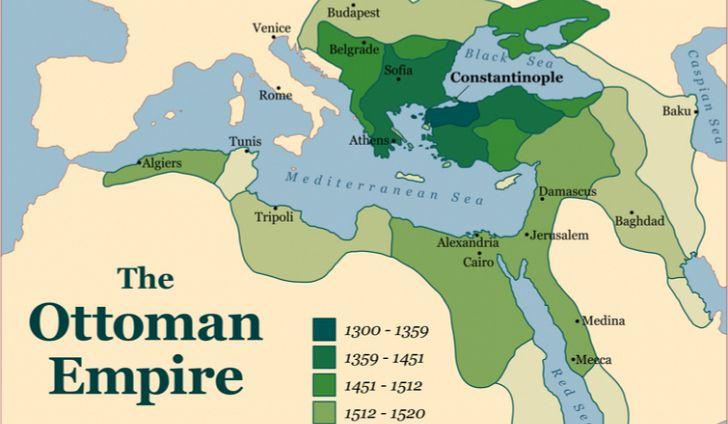
The Ottoman Empire was a prominent Islamic state that emerged in the late 13th century and lasted until the early 20th century. Founded by Osman I, the empire expanded to encompass vast territories across Southeast Europe, Western Asia, and North Africa.
Origins and Expansion
The empire's foundation is attributed to Osman I, a leader of the Turkish tribes in Anatolia, around 1299. The term "Ottoman" is derived from Osman's name, which was "Uthman" in Arabic. Under Osman's leadership and that of his successors, the Ottomans established a formal government and began territorial expansion. Notably, in 1453, Mehmed II led the conquest of Constantinople, marking the end of the Byzantine Empire and renaming the city Istanbul. This strategic victory transformed Istanbul into a dominant international center of trade and culture. (history.com)
Peak of Power
The empire reached its zenith during the reign of Suleiman the Magnificent (1520–1566). Suleiman personally led Ottoman armies in their conquests of numerous European strongholds and fought against the Safavid Empire of Persia, resulting in the annexation of Mesopotamia. Under his rule, the Ottoman fleet dominated the seas from the Mediterranean to the Red Sea and through the Persian Gulf. Suleiman also instituted significant judicial reforms, harmonizing sultanic and Islamic laws, and oversaw a "Golden Age" of artistic, literary, and architectural development. (en.wikipedia.org)
Cultural and Religious Diversity
The Ottoman Empire was characterized by its multicultural and multi-religious society. Through the millet system, various religious communities, including Christians and Jews, were granted a degree of self-governance, allowing them to manage their internal affairs under their religious leaders. This system fostered cultural diversity and religious tolerance, contributing to the empire's rich cultural tapestry. (havefunwithhistory.com)
Decline and Fall
Despite its longevity, the empire began to decline after the 16th century. Factors contributing to this decline included military defeats, such as the loss at the Battle of Lepanto in 1571, economic challenges, and administrative inefficiencies. The empire's involvement in World War I on the side of the Central Powers led to its eventual dissolution. In 1922, the Turkish national movement abolished the sultanate, marking the end of the Ottoman Empire and the establishment of the modern Republic of Turkey. (history.com)
Legacy
The Ottoman Empire's legacy is profound, influencing the political, cultural, and social landscapes of the regions it once governed. Its administrative systems, legal reforms, and cultural contributions continue to be studied for their impact on subsequent historical developments.