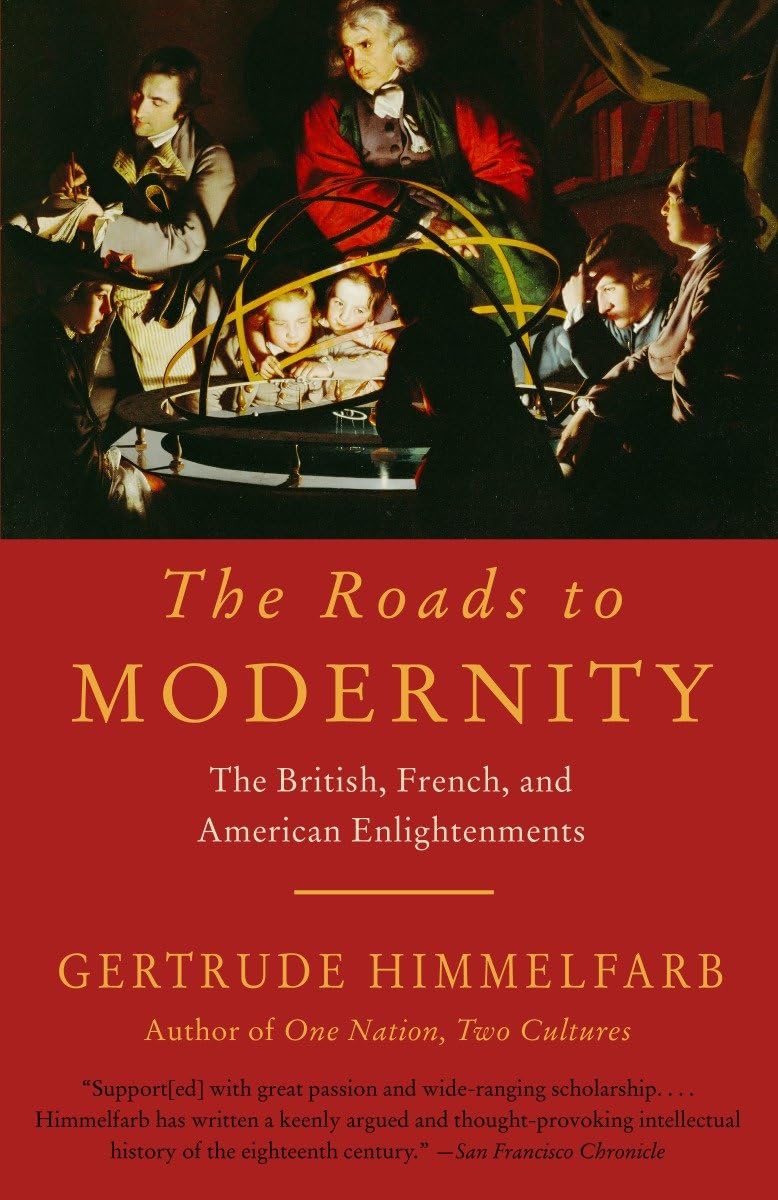
European intellectual and cultural movement, active chiefly from the late 17th to the late 18th century, centered in France, Britain, the Dutch Republic, the German states, Italy, and Scotland, and often called the Age of Reason. Core themes included confidence in reason and scientific method, skepticism toward inherited authority, natural rights, religious toleration, and programs for improving law, education, economy, and governance (Britannica;
Stanford Encyclopedia of Philosophy). (
britannica.com)
Origins and intellectual context
The movement drew energy from the Scientific Revolution’s methods and successes, symbolized by Isaac Newton’s Principia (1687), which modeled a mathematically intelligible nature and inspired confidence in human inquiry (Britannica;
Britannica). Rationalists including Descartes, Spinoza, and Leibniz, and empiricists such as John Locke, shaped debates about knowledge; Locke’s Essay (1689) argued against innate ideas and grounded knowledge in experience (
Britannica). Newtonian science and new learned societies (e.g., the Royal Society) institutionalized shared methods, publications, and replication (
Britannica). (
britannica.com)
Communication, publics, and the Republic of Letters
Exchange accelerated through an expanding print culture, periodicals, academies, coffeehouses, and salons, forming a transnational "Republic of Letters" in which scholars and writers circulated manuscripts, books, and letters. Digital humanities work has mapped these networks among figures such as Voltaire and John Locke (Stanford—Mapping the Republic of Letters;
CESTA Stanford). The era’s most ambitious reference work, the Encyclopédie (1751–72), edited by Denis Diderot and Jean d’Alembert, sought to catalog the sciences, arts, and trades while encountering censorship (
Britannica). (
republicofletters.stanford.edu)
Programmatic statements and key ideas
In 1784, Immanuel Kant defined Enlightenment as "humankind’s emergence from self-incurred immaturity" and gave the motto Sapere aude—"Dare to know"—calling for the public use of reason (Constitution.org—Kant, What Is Enlightenment?). Across Europe, philosophes and Aufklärer promoted methodological naturalism, critical inquiry, and secular accounts of morality and society while debating metaphysics, religion, and politics (
Stanford Encyclopedia of Philosophy). Deism emerged as a prominent religious outlook emphasizing a rational Creator and rejecting revealed dogma’s authority (
Britannica). (
constitution.org)
Political philosophy and rights
Locke’s political writings articulated natural rights to life, liberty, and property and grounded government in consent, providing a touchstone for later rights discourse and constitutionalism (Britannica). Montesquieu’s Spirit of Laws (1748) analyzed forms of government and famously advanced separation of powers as a safeguard for liberty, a doctrine highly influential for later constitutions and the 1789 French Declaration (
Britannica;
Britannica). Jean-Jacques Rousseau developed a theory of the general will and republican liberty in The Social Contract (1762), reshaping debates on sovereignty and civic freedom (
Britannica). The spread of toleration—through arguments such as Locke’s "Letter Concerning Toleration" (1689) and policies including the English Toleration Act (1689) and Joseph II’s Toleranzpatent (1781)—further marked the era (
Britannica;
Britannica;
Britannica). (
britannica.com)
Economy, society, and reform
Scottish thinkers shaped moral philosophy and political economy; Adam Smith’s Wealth of Nations (1776) analyzed division of labor, markets, and "system of natural liberty" within an Enlightenment framework continuous with his moral theory (Britannica;
Britannica). Many rulers adopted "enlightened absolutism," pursuing legal codification, religious toleration, and administrative centralization while preserving monarchy, exemplified by Frederick II and Joseph II (
Britannica). Networks of salons and coffeehouses—especially in Paris and London—functioned as arenas for debate, publication, and sociability in the emergent public sphere (for the broader model, see Habermas’s account of the bourgeois public sphere) (
Stanford Encyclopedia of Philosophy—Habermas, §1.2). (
britannica.com)
Publishing, censorship, and knowledge projects
Ambitious enterprises of knowledge organization—encyclopedias, dictionaries, learned journals—helped disseminate new methods and results. The Encyclopédie gathered thousands of articles and plates on sciences and trades and faced intermittent suppression and clandestine edits by printers wary of authorities (Britannica). The institutional infrastructure of the Scientific Revolution (academies, societies, journals) continued to expand, embedding norms of open critique and replication (
Britannica). (
britannica.com)
Geographies and variations
While France remained a focal point for the philosophes, important strands developed in the Dutch Republic, Britain and the Scottish Enlightenment, German Aufklärung, Italy, and Spain. Regional differences reflected confessional regimes, press laws, and institutional settings, but a shared commitment to critique and improvement traversed borders via correspondence and travel (Britannica—History of Europe: The Enlightenment). (
britannica.com)
Revolutions and documents
Enlightenment political languages informed the American Revolution and French Revolution. The U.S. Declaration of Independence (1776) invoked natural rights and government by consent, while France’s Declaration of the Rights of Man and of the Citizen (1789) articulated principles of liberty, equality, and national sovereignty (Britannica;
Avalon Project, Yale). Many historians emphasize complex causal pathways, but the diffusion of Enlightenment critiques and ideals provided resources for revolutionary actors (
Britannica—History of Europe: Age of Revolution). (
britannica.com)
Critics, limits, and legacies
Debates within the movement ranged from skepticism (e.g., Hume’s challenges to causation and induction) to rationalist system-building; such debates provoked both reformist programs and internal doubts about reason’s scope (Britannica;
Britannica). Subsequent critics—Romantics, Counter-Enlightenment thinkers, and 20th‑century theorists—questioned its universalism, instrumental reason, or social exclusions, while defenders traced modern human rights and constitutional democracy to Enlightenment commitments (
Stanford Encyclopedia of Philosophy;
Britannica—The Enlightenment: Key Facts). (
britannica.com)