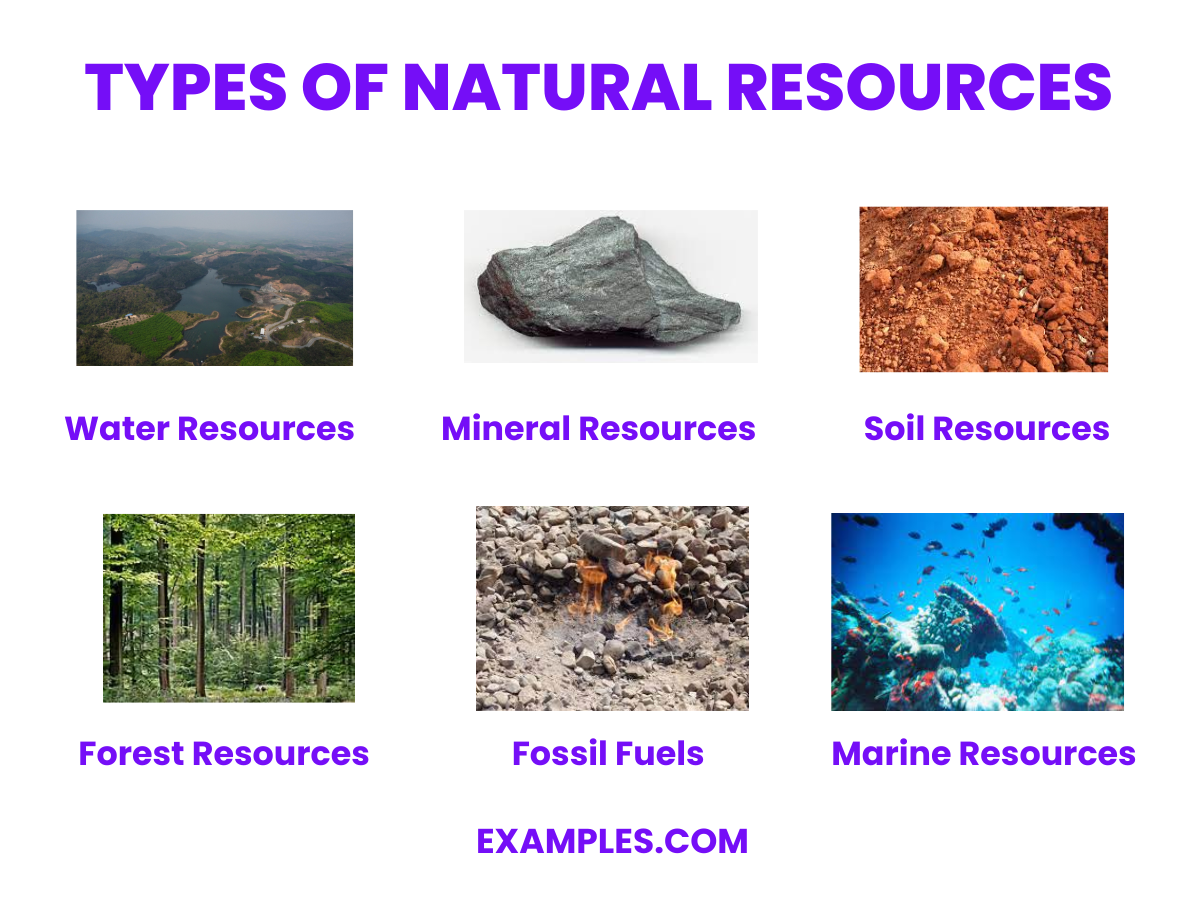
Natural resources; primary classifications: renewable/non-renewable; biotic/abiotic. Economic significance: inputs to production, trade, and livelihoods; environmental implications span climate, biodiversity, water, and pollution.
Definition and Classifications
A natural resource is a material or environmental asset from nature that people value and use, commonly categorized as renewable—capable of replenishment at the rate of use—and non‑renewable—finite on human timescales. According to National Geographic, renewable examples include timber, wind, and solar energy, while non‑renewable examples include coal and natural gas. Statistical and policy frameworks refer to natural commodities (resources) as natural assets used for production and consumption
TNFD Glossary. Classifications also include biotic resources (derived from living organisms) and abiotic resources (minerals, water, air), which underpin analyses of Biodiversity and Mineral Resource management.
Related policy agendas emphasize sustainable consumption and production under the Sustainable Development Goals, especially SDG 12 on ensuring sustainable resource use UN SDG 12.
Economic Importance
Natural resources are foundational to industrialization, trade, and national income. The World Bank tracks “total natural resources rents (% of GDP)” to indicate the share of economic output attributable to extraction of oil, gas, coal, minerals, and forests World Bank Data. Global monitoring of material use shows that from 2015 to 2022, domestic material consumption (DMC) rose 23.3%, with per‑capita DMC reaching 14.2 tons, led by growth in non‑metallic minerals for construction
UN SDG 12. The International Resource Panel’s Global Resources Outlook (2024) links resource use with the “triple planetary crisis” of climate change, biodiversity loss, and pollution, and calls for systemic shifts to align resource use with the 2030 Agenda
International Resource Panel.
Energy Resources
Energy underpins all resource supply chains. The Energy Institute’s Statistical Review reports that global energy supply increased in 2024, with fossil fuels accounting for about 86% of the energy mix and record consumption across major energy sources amid strong demand Energy Institute. The IEA’s Key World Energy Statistics provides complementary indicators on production, trade, and consumption across fuels and electricity systems
IEA. These trends shape the pace of the Energy Transition from fossil fuels to Renewable Energy and efficiency measures.
Mineral and Metal Resources
Minerals supply infrastructure, manufacturing, and clean‑energy technologies. The U.S. Geological Survey’s Mineral Commodity Summaries 2025 is the earliest comprehensive source of 2024 world mineral production, reserves, and trade data, covering more than 90 commodities with two‑page synopses per mineral and appendices on reserve classifications USGS MCS 2025. Such data underpin assessments of critical mineral supply risks and country production profiles essential for planning and policy.
Water Resources
Freshwater is essential for agriculture, industry, and households. FAO’s AQUASTAT estimates that, globally, water withdrawals are about 69% agricultural, 19% industrial, and 12% municipal; country averages are 59%, 18%, and 23% respectively, with large regional variation (e.g., 91/7/2 in South Asia; 5/23/73 in Western Europe) FAO AQUASTAT. The UN World Water Development Reports synthesize status and trends in availability, governance, and demand, and inform policy on scarcity and allocation
UN WWDR 2024.
Forests, Timber, and Biodiversity Linkages
Forests provide timber, fiber, carbon storage, and habitats. The FAO Global Forest Resources Assessment 2020 reports 4.06 billion hectares of forest—nearly one‑third of Earth’s land—with more than half located in five countries (Russian Federation, Brazil, Canada, United States, China). Primary forests total about 1.11 billion ha; since 1990 an estimated 420 million ha were lost to deforestation, though the net loss rate slowed to about 4.7 million ha per year in 2010‑2020 FAO FRA 2020.
Biodiversity trends influence and are influenced by resource use. The IPBES 2019 Global Assessment synthesizes evidence on the status and trends of biodiversity and nature’s contributions to people, serving as an authoritative reference for conservation and sustainable use responses IPBES.
Environmental Impacts and Sustainable Management
Resource extraction and processing drive emissions, land‑use change, waste, and ecosystem degradation. The International Resource Panel (2024) connects rising resource use to the triple planetary crisis and highlights pathways for decoupling economic well‑being from material throughput through circularity, efficiency, and sustainable consumption and production International Resource Panel. SDG 12 calls for the sustainable management and efficient use of natural resources by 2030 (Target 12.2) and documents progress and gaps, including rising material footprints and persistent e‑waste challenges
UN SDG 12. Practical measures include cleaner production, extended producer responsibility, eco‑design, sustainable public procurement, and investment in data and governance for resource efficiency—core elements of the Circular Economy.
Data Sources and Monitoring
Authoritative global monitoring frameworks include UN and FAO assessments for water and forests, IEA and the Energy Institute for energy balances, and USGS for minerals. Economic indicators such as natural resources rents from the World Bank inform macro‑policy and fiscal planning World Bank Data. Together, these sources enable cross‑sector planning to align resource use with environmental limits and development objectives under the Sustainable Development Goals.