The Receptor for Advanced Glycation End Products (RAGE) is a pattern‑recognition receptor of the immunoglobulin superfamily that binds multiple endogenous danger-associated ligands and mediates inflammatory signaling; it is encoded by the human AGER gene within the Major histocompatibility complex and was first cloned in 1992 from lung tissue. Cloning and expression of a cell surface receptor for advanced glycosylation end products of proteins;
AGER Gene (NCBI);
Receptor for age (RAGE) is a gene within the major histocompatibility class III region.
Gene and protein
The human receptor is encoded by AGER (Gene ID: 177) on chromosome 6p21.3 (MHC class III region) and displays multiple alternatively spliced transcripts, including secreted isoforms; highest baseline expression is observed in lung. AGER Gene (NCBI);
Three genes in the human MHC class III region near the junction with the class II. The canonical human protein (UniProt Q15109) comprises 404 amino acids with an N‑terminal signal peptide, three extracellular Ig‑like domains (V, C1, C2), a single transmembrane helix, and a short cytosolic tail essential for signaling.
DrugBank Q15109;
Crystal structure of the human RAGE ectodomain (VC1C2 fragment).
Structure
X‑ray structures resolved for the ectodomain show a rigid VC1 tandem and a more flexible C2 domain, accommodating diverse ligands; complexes with S100A6 and S100B define binding surfaces primarily on the V/C1 region. Crystal structure of the human RAGE ectodomain (VC1C2) in complex with S100A6;
Crystal structure of the human RAGE ectodomain (fragment VC1C2) in complex with mouse S100A6;
S100B–RAGE‑derived peptide complex. An integrative model suggests full‑length RAGE forms higher‑order oligomers that present positively charged V‑domain surfaces for ligand engagement.
Integrative model of full‑length RAGE in complex with S100B.
Ligands and recognition
RAGE binds heterogeneous advanced glycation end‑products (AGEs), S100/calgranulin family members (e.g., S100A6, S100A8/A9, S100B), HMGB1, and amyloid‑β; recognition depends more on shared physicochemical motifs than strict sequence, consistent with a Pattern recognition receptor role. Receptor for Advanced Glycation End‑Products and Its Involvement in Inflammatory Diseases;
The Structure of the RAGE:S100A6 Complex;
Roles of the Receptor for Advanced Glycation End Products and Its Ligands in the Pathogenesis of Alzheimer’s Disease. RAGE also functions as a nucleic acid receptor that binds DNA/RNA at the cell surface and promotes endosomal delivery to TLRs (especially TLR9 and TLR7/8), lowering activation thresholds for nucleic‑acid sensing.
RAGE is a nucleic acid receptor that promotes inflammatory responses to DNA;
RAGE Enhances TLR Responses through Binding and Internalization of RNA;
Toll‑like receptor 9–dependent activation by DNA‑containing immune complexes is mediated by HMGB1 and RAGE.
Expression and physiology
In adult tissues, RAGE expression is particularly high in lung alveolar type I epithelial cells, where it localizes predominantly to basolateral membranes; soluble RAGE in airspaces and blood serves as a marker of type I cell injury in acute lung injury/ARDS and correlates with impaired alveolar fluid clearance. Receptor for advanced glycation end‑products is a marker of type I lung alveolar cells;
RAGE is a marker of type I cell injury in acute lung injury (Chest/PMC). In translational animal models, RAGE or its ligands modulate epithelial barrier function and fluid clearance.
Inhibition of the Receptor for Advanced Glycation End‑Products in ARDS: piglet randomized trial;
RAGE inhibition reduces acute lung injury in mice.
Signal transduction
Ligand engagement triggers signaling cascades including NF‑κB, MAPKs (ERK, JNK, p38), PI3K/Akt, JAK/STAT, and NADPH oxidase, often with positive feedback that sustains receptor expression. Pathophysiology of RAGE in inflammatory diseases;
Receptor for Advanced Glycation End‑Products and Its Involvement in Inflammatory Diseases. The short cytosolic tail binds the formin DIAPH1 (mDia1); the RAGE–DIAPH1 interaction is required for Rac1/Cdc42 activation and cell migration.
Interaction of the RAGE Cytoplasmic Domain with Diaphanous‑1. HMGB1–RAGE signaling activates endothelial NF‑κB and TNF‑α production, illustrating DAMP‑driven inflammation.
HMGB1 activates NF‑κB signaling by RAGE in endothelial cells. Crosstalk with TLR pathways augments responses to HMGB1 and other ligands.
Interplay between RAGE and TLR4 regulates HMGB1‑induced inflammation.
Soluble isoforms and shedding
Soluble RAGE comprises secreted splice variants (esRAGE) and ectodomains generated by proteolytic shedding (cRAGE); ADAM10 is a principal sheddase, and sRAGE can act as a decoy for RAGE ligands. A soluble form of RAGE is produced by ADAM10 sheddase;
Regulation of RAGE ectodomain shedding;
AGER Gene (NCBI).
Disease associations
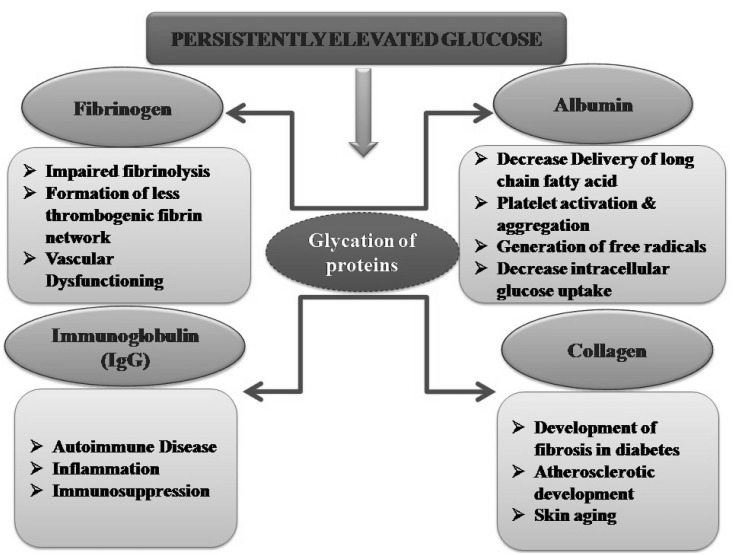
Through persistent activation by accumulating ligands, RAGE is implicated in diabetes complications, atherosclerosis, chronic kidney disease, neurodegeneration, cancer, and acute and chronic lung disease. The AGE‑RAGE Axis: Implications for Age‑Associated Arterial Diseases;
Pathophysiology of RAGE in inflammatory diseases. In the central nervous system, RAGE interacts with amyloid‑β and HMGB1 and contributes to neuroinflammation relevant to Alzheimer's disease.
Roles of the Receptor for Advanced Glycation End Products and Its Ligands in the Pathogenesis of Alzheimer’s Disease. In the injured lung (e.g., ARDS), elevated bronchoalveolar and plasma sRAGE levels associate with type I cell injury and impaired alveolar fluid clearance.
RAGE is a marker of type I cell injury (Chest/PMC);
sRAGE predicts impaired alveolar fluid clearance.
Therapeutic targeting
Antagonizing RAGE signaling is being explored via soluble decoy receptors, inhibitory peptides, antibodies, and small molecules. In large‑animal and murine ARDS models, recombinant sRAGE or RAGE antagonist peptides improved oxygenation and restored alveolar fluid clearance. Inhibition of RAGE in ARDS (piglet trial);
RAGE inhibition reduces acute lung injury in mice. The small‑molecule RAGE antagonist azeliragon (TTP488) advanced to phase 3 trials in mild Alzheimer’s disease but failed to meet co‑primary endpoints in 2018, leading to trial discontinuation.
vTv Therapeutics announces STEADFAST Part A topline results;
BioCentury report on azeliragon miss.
Nomenclature and related concepts
RAGE is also known by its gene symbol AGER and has been described as a receptor for multiple DAMPs, including HMGB1 and S100 proteins; its engagement sustains NF‑κB activity and integrates with Toll-like receptor signaling, linking sterile danger signals to chronic inflammation. Receptor for Advanced Glycation End‑Products and Its Involvement in Inflammatory Diseases;
RAGE is a nucleic acid receptor.
Advanced glycation end-product; Amyloid beta; Pattern recognition receptor.